




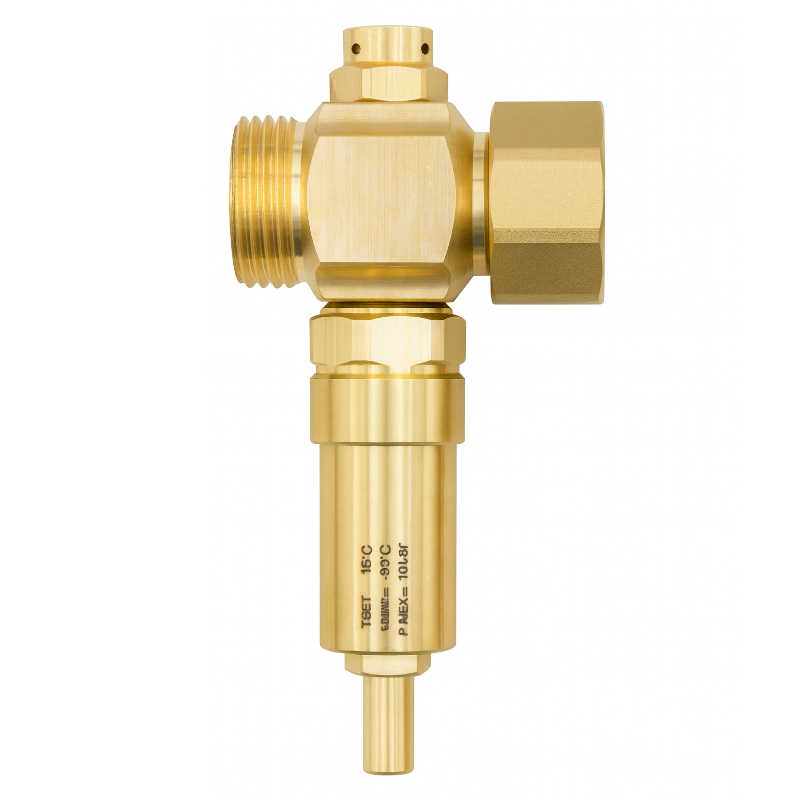
1″ Male x Female Swivel Antifreeze Valve
The 1″ Male x Female Swivel Antifreeze Valve helps protect water-based heating systems against freezing during very cold conditions. It provides an important safeguard for external pipework associated with monobloc air source heat pumps and other suitable systems.
When water temperature falls towards freezing, the valve automatically allows water to discharge from the system. Therefore, colder water can leave the exposed pipework before it freezes and potentially causes damage.
Furthermore, the 1″ male x female connection includes a convenient swivel fitting. This helps simplify installation and allows easier positioning within suitable pipework arrangements.
The valve operates mechanically and does not depend on an electrical supply. Consequently, it can continue providing frost protection during a power cut, when vulnerable external heat pump pipework may otherwise face an increased risk of freezing.
Why Choose a 1″ Antifreeze Valve?
Helps Protect Heat Pump Pipework
External water-filled pipework can become vulnerable during prolonged freezing weather. The antifreeze valve provides automatic protection when water temperatures fall towards freezing.
Ideal for Air Source Heat Pumps
Monobloc air source heat pumps circulate system water between the outdoor unit and the property. Therefore, external sections of the heating circuit can require additional frost protection.
Automatic Mechanical Operation
The valve responds automatically to low water temperatures. Consequently, it does not rely on the homeowner manually opening a valve during freezing conditions.
Works Without Electricity
Electrical frost protection may become unavailable during a power failure. In contrast, the antifreeze valve operates mechanically and does not require electrical power.
Male x Female Connection
The 1″ male x 1″ female connection makes the valve suitable for compatible heating and heat pump pipework.
Female Swivel Connection
The swivel connection simplifies installation and positioning. Therefore, installers can create a neat connection without unnecessarily rotating adjoining components.
Key Features
- 1″ antifreeze valve
- Male x female connection
- Female swivel connection
- Designed for water-based heating systems
- Ideal for compatible heat pump installations
- Suitable for monobloc air source heat pumps
- Helps protect external pipework
- Automatic frost protection
- Temperature-responsive operation
- Mechanical operation
- No electrical supply required
- Helps protect during power cuts
- Automatically discharges water at low temperatures
- Helps reduce the risk of frozen pipework
- Compact installation
- Suitable for new heat pump installations
- Suitable for heating system upgrades
- Professional heating system component
Technical Specification
- Product: Antifreeze Valve
- Connection Size: 1″
- Connection Type: Male x Female
- Female Connection: Swivel
- Product Type: Automatic Frost Protection Valve
- Operation: Mechanical
- Electrical Supply Required: No
- Primary Application: Heat Pump Frost Protection
- Suitable Systems: Compatible Water-Based Heating Systems
- Typical Installation: External Heat Pump Pipework
- Function: Automatic Water Discharge During Low-Temperature Conditions
What Is an Antifreeze Valve?
An antifreeze valve provides automatic frost protection for water-filled heating pipework.
Water expands when it freezes. Consequently, trapped frozen water can place considerable pressure on pipes, fittings, valves and heat exchangers.
An antifreeze valve helps prevent this situation.
When the water passing through the valve becomes dangerously cold, the valve begins to discharge water. Warmer replacement water can then move into the vulnerable section of the system.
Therefore, the valve helps prevent the water inside exposed pipework from reaching freezing point.
Why Do Heat Pumps Need Frost Protection?
Air source heat pumps often have equipment and pipework installed outside the property.
A monobloc air source heat pump contains the refrigeration circuit within the outdoor unit. Water from the heating system then circulates between the heat pump and the property.
This means part of the water circuit remains outdoors.
During normal operation, the heat pump manages its own frost protection. However, problems can occur during prolonged low temperatures, particularly if circulation stops.
For example, a power cut can prevent pumps and electronic frost protection functions from operating.
An antifreeze valve provides an additional mechanical safeguard for suitable installations.
Ideal for Monobloc Air Source Heat Pumps
Monobloc heat pumps provide one of the most common applications for antifreeze valves.
Unlike a split heat pump, a monobloc system can have heating water travelling directly to the outdoor unit.
Therefore, installers need to consider how the external water circuit will behave during freezing weather.
Correctly installed antifreeze valves can help protect vulnerable sections of the circuit.
This makes them suitable for many:
- Air source heat pumps
- Monobloc heat pumps
- Low-temperature heating systems
- Renewable heating installations
- Domestic heat pump systems
- Commercial heat pump systems
Always follow the heat pump manufacturer’s frost protection requirements.
Protection During a Power Cut
Power failures can create particular problems for water-based heat pump systems during freezing weather.
Normally, circulation pumps move water through the system. Furthermore, the heat pump controls may activate specific frost protection functions.
During a power failure, these electrical safeguards cannot operate.
However, a mechanical antifreeze valve does not need electricity.
Therefore, the valve can still respond when water temperatures fall towards freezing. This provides an important additional layer of passive protection.
How Does an Antifreeze Valve Work?
The operating principle is simple.
During normal heating operation, the antifreeze valve remains closed. Therefore, system water continues circulating normally.
If the water temperature falls sufficiently, the valve’s thermostatic mechanism reacts.
The valve then begins to open and allows very cold water to discharge.
As colder water leaves, warmer water from elsewhere in the system can replace it.
Once conditions recover, the valve closes again.
This automatic process helps keep water within vulnerable pipework above freezing conditions.
Why Install Antifreeze Valves Outside?
The external sections of a heat pump system face the lowest ambient temperatures.
Therefore, installers normally position frost protection components where they can protect vulnerable outdoor water-filled pipework.
Correct positioning remains essential.
The valve must also have a suitable discharge arrangement. Water released during frost protection needs somewhere safe to drain without creating additional hazards.
Always follow the system designer’s and equipment manufacturer’s installation instructions.
1″ Male x Female Swivel Connection
Installation space around heat pumps can become restricted.
Rigid threaded components can also prove awkward to align correctly.
Therefore, this antifreeze valve features a 1″ male x female connection with a female swivel.
The swivel connection allows easier assembly with compatible pipework and fittings. Consequently, installers gain greater flexibility when positioning the valve.
This can also help create a cleaner and more serviceable installation.
Why the Swivel Connection Matters
A swivel connection provides several practical installation benefits.
Firstly, installers can connect the valve without rotating the entire component or adjoining pipework.
Secondly, the valve can be positioned more easily once the threaded connection reaches the required location.
Furthermore, servicing or replacement can become more straightforward where the surrounding installation permits.
Therefore, the swivel connection provides a useful advantage in compact heat pump installations.
Antifreeze Valves and Glycol
There are several ways to protect external heat pump pipework against freezing.
One approach involves adding a suitable antifreeze solution, such as inhibited glycol, to the complete heating circuit.
Another approach uses mechanical antifreeze valves with water-filled systems.
Each method has different system requirements.
Therefore, installers should follow the heat pump manufacturer’s instructions and system design rather than automatically combining frost protection methods.
An Important Heat Pump Safety Component
An antifreeze valve may be physically small, but it performs an important role.
Frozen water can potentially damage expensive components within a heating system. Therefore, appropriate frost protection should form part of the system design.
The valve can help protect:
- External heat pump pipework
- Heat pump connections
- Water-filled outdoor circuits
- Compatible fittings
- Valves
- Other vulnerable system components
Correct installation remains essential for effective protection.
Installing Antifreeze Valves in Pairs
Many monobloc heat pump installations use antifreeze valves on both the flow and return pipework.
This arrangement helps protect both sides of the external water circuit.
Therefore, a typical installation may require two antifreeze valves rather than one.
The exact number and position depend on the heat pump, pipework design and manufacturer’s requirements.
Always follow the installation instructions for the specific heat pump system.
Correct Antifreeze Valve Positioning
The effectiveness of an antifreeze valve depends heavily on correct installation.
Installers should consider:
- Heat pump manufacturer’s requirements
- Flow and return pipework
- Outdoor pipe arrangement
- Valve orientation
- Accessibility
- Drainage
- Insulation
- Nearby isolation valves
- Potential trapped sections
- Service access
Furthermore, the discharge outlet must remain free to operate.
Never cover or obstruct the working components of the valve with pipe insulation unless the manufacturer’s instructions specifically permit it.
Safe Water Discharge
An antifreeze valve protects the system by releasing water.
Therefore, installers must consider where this water will go.
The discharge should not create:
- Slippery walkways
- Ice hazards
- Building damage
- Electrical hazards
- Blocked drainage
- Water accumulation around the heat pump
Correct installation allows discharged water to drain safely away from the equipment and surrounding area.
Ideal for New Heat Pump Installations
Planning frost protection during the original heat pump installation provides the best opportunity to position valves correctly.
Installers can consider the complete external pipe arrangement before selecting suitable locations.
Furthermore, the 1″ swivel connection can help simplify final assembly.
Therefore, the valve makes a useful component for professionally designed monobloc heat pump installations.
Suitable for Heat Pump Upgrades
Existing heat pump installations may also benefit from additional frost protection where the system design and manufacturer permit it.
For example, an installer may review frost protection after:
- Changing external pipework
- Replacing a heat pump
- Altering the heating system
- Experiencing freezing problems
- Reviewing power-cut protection
- Upgrading system components
Always assess the complete heating system before making changes.
Antifreeze Valve vs Electrical Frost Protection
Modern heat pumps normally include built-in frost protection functions.
These can use the circulation pump and control system to maintain safe water temperatures.
However, electrical frost protection depends on electrical power.
A mechanical antifreeze valve provides a different form of protection because it does not require electricity.
Therefore, the two methods can provide different layers of system protection where approved by the heat pump manufacturer.
Antifreeze Valve vs Pipe Insulation
Good-quality pipe insulation plays an important role in any external heat pump installation.
However, insulation slows heat loss rather than producing heat.
During a prolonged power cut in very cold weather, insulated water can eventually approach freezing temperature.
An antifreeze valve provides active mechanical protection by allowing dangerously cold water to discharge.
Therefore, suitable insulation and correctly designed frost protection can work together as part of the overall system design.
Ideal Applications
The 1″ Male x Female Swivel Antifreeze Valve suits compatible:
- Monobloc air source heat pumps
- Heat pump flow pipework
- Heat pump return pipework
- Renewable heating systems
- Water-based heating systems
- Domestic heat pump installations
- Commercial heat pump installations
- External heating pipework
- Low-temperature heating systems
- New heat pump installations
- Heat pump system upgrades
Why Buy a 1″ Antifreeze Valve from Kudos Trading?
Kudos Trading supplies professional heat pump, underfloor heating and plumbing products for installers throughout the UK.
Our extensive range also makes it easy to combine antifreeze valves with pre-insulated pipe, multilayer pipe, fittings and other heat pump installation components.
When you order from Kudos Trading, you’ll benefit from:
- Professional heating products
- Competitive UK prices
- Fast nationwide delivery
- Expert technical support
- Extensive product availability
- Friendly customer service
- Over 25 years of industry experience
Frequently Asked Questions
What is a 1″ antifreeze valve?
A 1″ antifreeze valve is a temperature-responsive mechanical valve designed to help protect suitable water-filled heating pipework from freezing.
What is an antifreeze valve used for?
It helps prevent water from freezing inside vulnerable heating pipework. The valve automatically releases very cold water when conditions approach its operating threshold.
Is this antifreeze valve suitable for heat pumps?
Yes. Its primary application is frost protection on compatible water-based heating systems, particularly monobloc air source heat pump installations.
Is this suitable for an air source heat pump?
It can suit compatible monobloc air source heat pump installations. Always follow the heat pump manufacturer’s frost protection requirements.
What connections does the valve have?
The valve has 1″ male and 1″ female connections, with a swivel on the female connection.
Why does the valve have a swivel fitting?
The female swivel simplifies connection and positioning. Therefore, installers do not need to rotate the entire valve or adjoining pipework during assembly.
Does an antifreeze valve need electricity?
No. The valve operates mechanically and does not require an electrical supply.
Will it work during a power cut?
Yes. Because the valve does not depend on electricity, it can continue providing mechanical frost protection during a power failure.
How does an antifreeze valve prevent freezing?
When the water temperature falls sufficiently, the thermostatic mechanism opens the valve. Cold water then discharges and allows warmer water to move into the vulnerable section.
Does the valve stay open permanently?
No. During normal operating temperatures, the valve remains closed. It opens when the water temperature falls towards its designed frost protection range.
Do I need two antifreeze valves for a heat pump?
Many monobloc heat pump systems use one valve on the flow and another on the return. However, always follow the requirements of the specific heat pump manufacturer and system design.
Where should antifreeze valves be installed?
They normally protect vulnerable external water-filled pipework. Exact positioning depends on the heat pump and pipework arrangement.
Can I cover the valve with pipe insulation?
The working parts and discharge arrangement must remain capable of operating correctly. Therefore, always follow the manufacturer’s insulation and installation requirements.
Does an antifreeze valve replace pipe insulation?
No. External heat pump pipework still requires suitable insulation. The antifreeze valve provides an additional form of frost protection.
Does an antifreeze valve replace glycol?
Not automatically. Glycol and antifreeze valves represent different frost protection strategies. Follow the heat pump manufacturer’s requirements when choosing the correct method.
What happens to the water released by the valve?
The installation must allow discharged water to drain safely. Therefore, installers should position the valve so released water cannot create an ice, slip or electrical hazard.
Is the valve suitable for professional heat pump installers?
Yes. The 1″ connection and swivel design make it a practical frost protection component for suitable professional heat pump installations.
Related Products
- 1¼” Antifreeze Valves
- Fernox Antifreeze Valves
- Pre-Insulated Heating Pipe
- PE-RT-AL-PE-RT 5 Layer Pipe
- PEX-AL-PEX Multilayer Composite Pipe
- Heat Pump Pipe Fittings
- Isolation Valves
- Underfloor Heating Manifolds
- Underfloor Heating Pumps
- Underfloor Heating Mixing Valves
- Underfloor Heating Controls
- Plumbing & Heating Tools
Next Working Day Delivery: Yes, we hold all our products in stock at our 7000 sq ft Nottingham warehouse and at our 3000 sq ft warehouse in Market Harborough and use DPD for a tracked next-day delivery.Collection Available: You can always collect from our Nottingham location and help yourself to a free tea and coffee.